Product design
SOCIAL MEDIA APP FOR PLAYER DISCOVERY
SOCIAL MEDIA APP FOR PLAYER DISCOVERY
Lead Product Designer for a niche social ecosystem. The application utilizes proximity-based matching and gamified rewards to solve the player discovery problem, projected to increase product retail Lifetime Value (LTV) by 30% through improved retention.
Lead Product Designer for a niche social ecosystem. The application utilizes proximity-based matching and gamified rewards to solve the player discovery problem, projected to increase product retail Lifetime Value (LTV) by 30% through improved retention.
Year
2026
Year
2026
Year
2026
Company
GridWars
Company
GridWars
Company
GridWars
Industry
Consumer Tech / Tabletop Gaming
Industry
Consumer Tech / Tabletop Gaming
Industry
Consumer Tech / Tabletop Gaming
Project Duration
Ongoing (alpha 1.2.1)
Project Duration
Ongoing (alpha 1.2.1)
Project Duration
Ongoing (alpha 1.2.1)
The tabletop industry faces a critical churn cliff where consumers stop purchasing physical products simply because they lack a consistent group to play with. I conceptualized The Grid as a dedicated social utility designed to bridge the gap between digital discovery and physical play. Unlike general social media, this platform is purpose-built to navigate the real world, turning local strangers into gaming groups and ensuring the hobby remains active and sustainable.
Objective
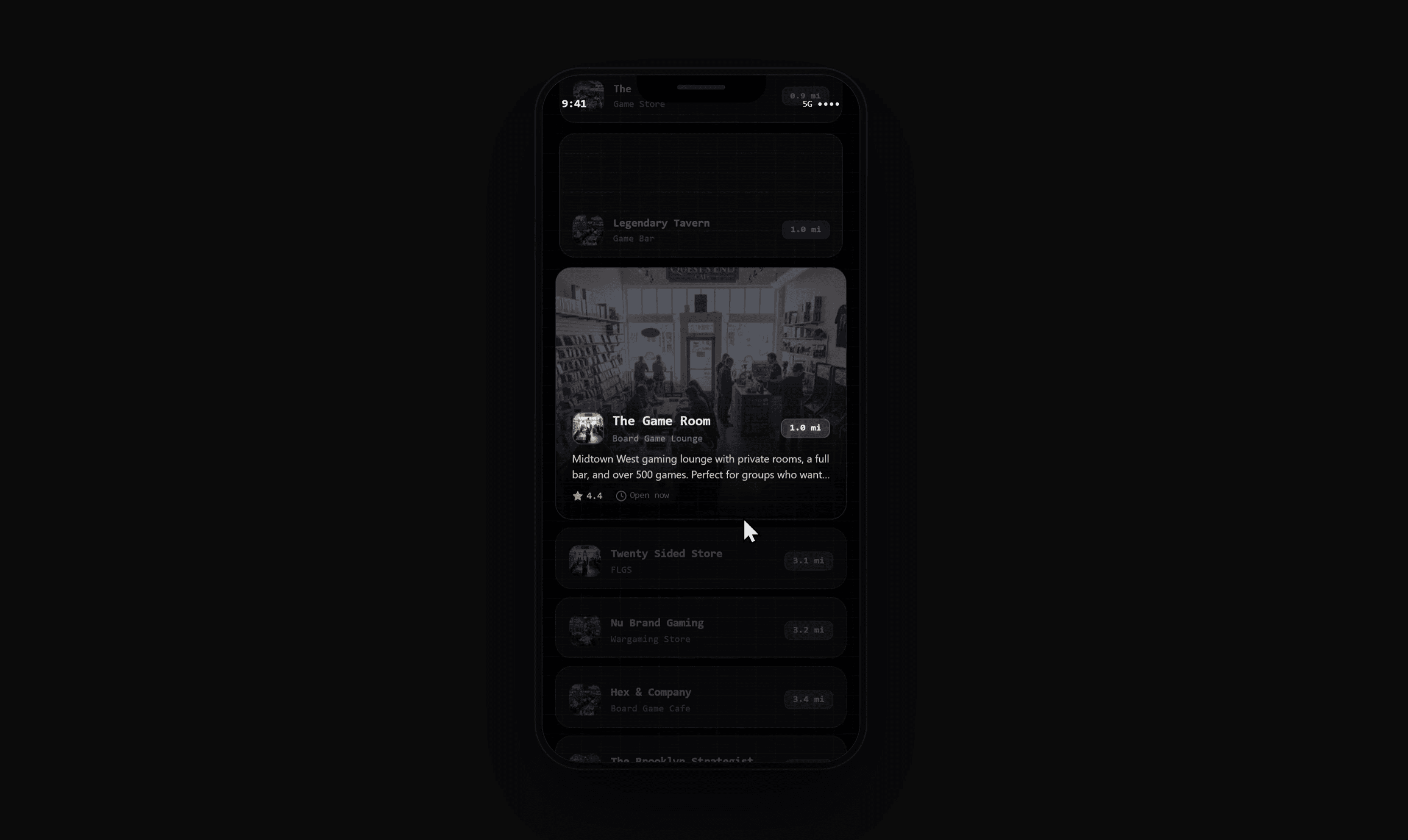
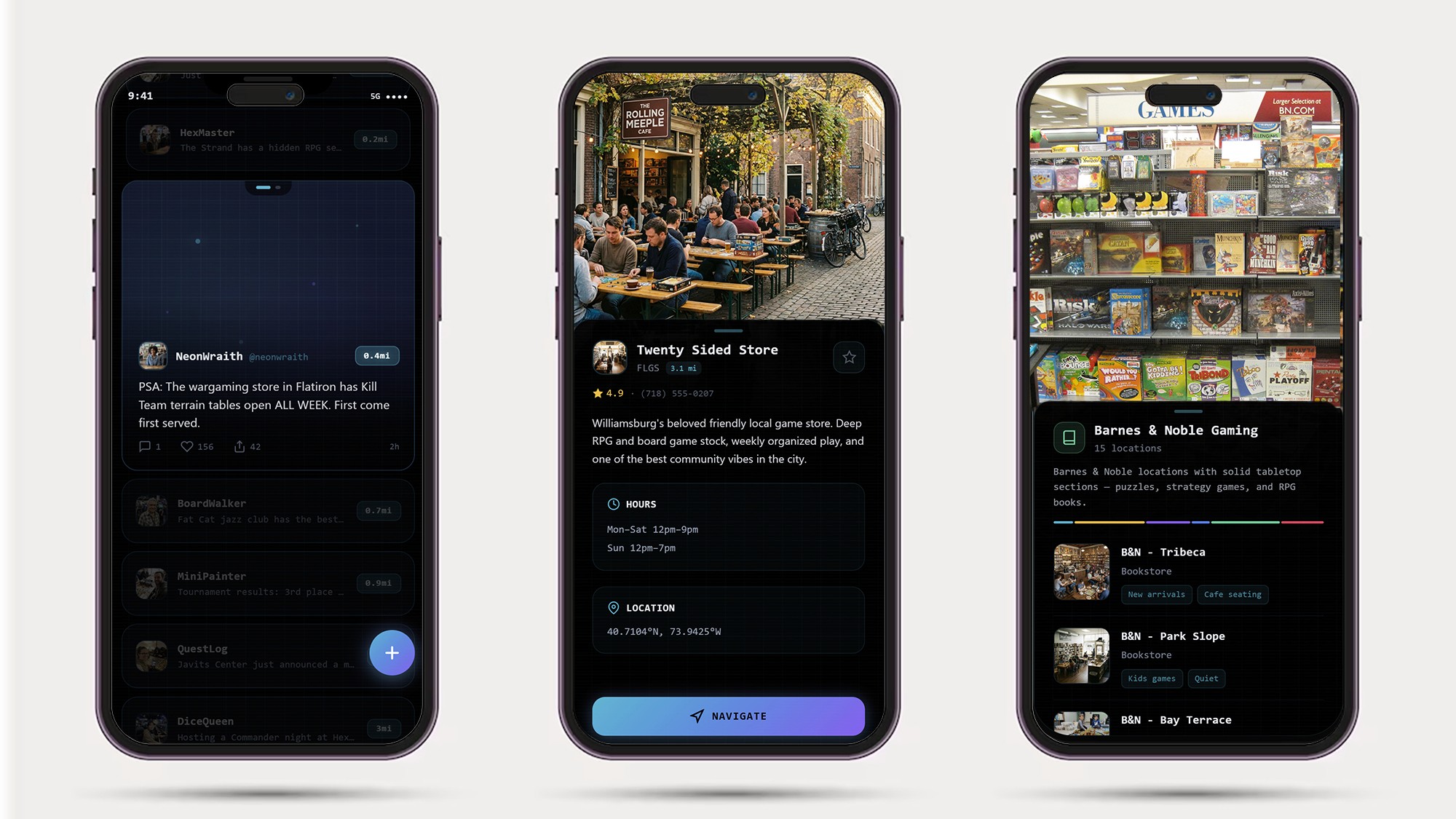
The objective was to engineer an Online-to-Offline (O2O) engine that incentivizes physical presence. I designed a fluid, single-component React interface where the primary interaction is navigation rather than scrolling. The system categorizes complex player preferences, such as Heavy Euro versus Party Game, and maps them to physical locations. This effectively creates a Waze for tabletop gaming that guides users to their next game session, utilizing a neutral territory feature to suggest safe public venues like local game stores or cafes.
Challenge
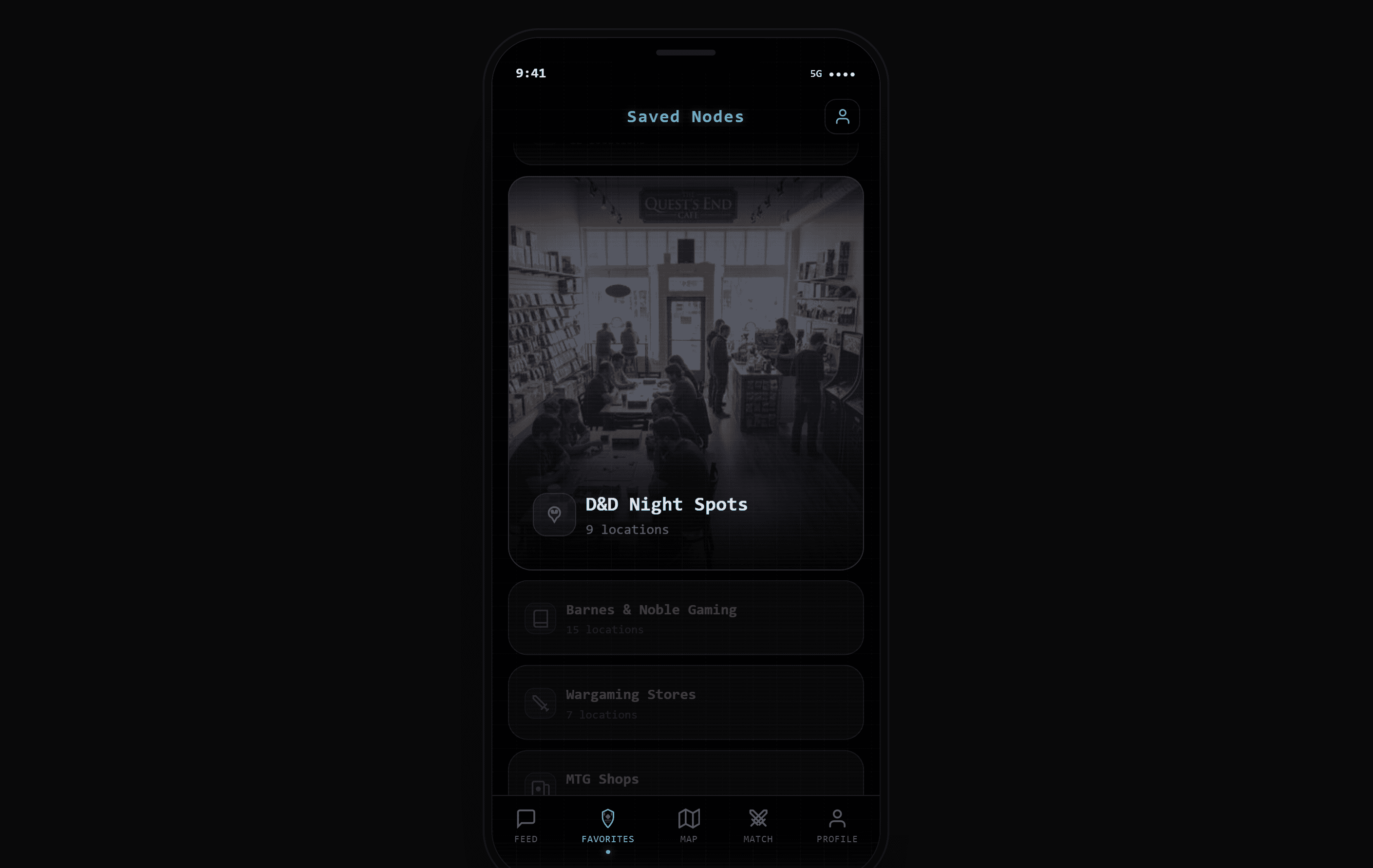
The core design challenge was creating a Proof of Play mechanism that felt rewarding rather than bureaucratic. I architected a QR-based verification system that allows users to scan opponents, record results, and wager digital currency in seconds. This required a deep application of behavioral psychology to balance the Stake of wagering coins with the Reward of earning exclusive 3D-printable files (STLs) and retail discounts. I also solved the cold start problem by designing a drop pin feature, allowing users to broadcast their intent to play at conventions or stores without needing a pre-existing friend list.
Result
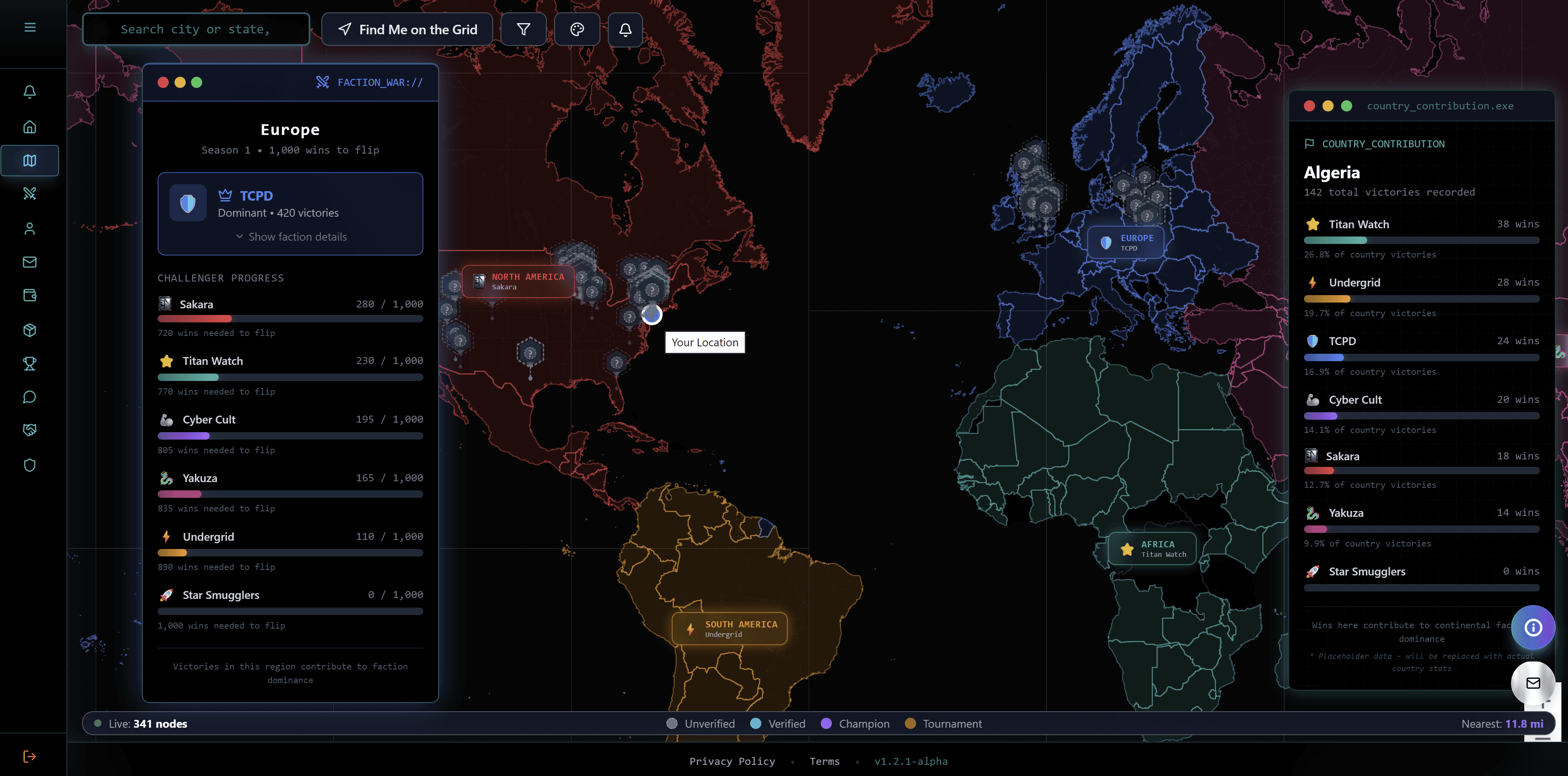
The resulting architecture creates a self-sustaining economy of play that drives foot traffic to retail partners without requiring direct integration. By gamifying the act of meeting up, the platform addresses the industry's fragmentation problem. Based on community retention models which show that socially active users retain significantly longer than solo players, the design is projected to deliver a 30% Uplift in Lifetime Value (LTV) for the ecosystem. The platform is currently in Alpha, successfully validating the Scan-to-Play loop with initial test groups.
Latest Projects

Product design
SOCIAL MEDIA APP FOR PLAYER DISCOVERY
SOCIAL MEDIA APP FOR PLAYER DISCOVERY
Lead Product Designer for a niche social ecosystem. The application utilizes proximity-based matching and gamified rewards to solve the player discovery problem, projected to increase product retail Lifetime Value (LTV) by 30% through improved retention.
Lead Product Designer for a niche social ecosystem. The application utilizes proximity-based matching and gamified rewards to solve the player discovery problem, projected to increase product retail Lifetime Value (LTV) by 30% through improved retention.
Year
2026
Year
2026
Year
2026
Company
GridWars
Company
GridWars
Company
GridWars
Industry
Consumer Tech / Tabletop Gaming
Industry
Consumer Tech / Tabletop Gaming
Industry
Consumer Tech / Tabletop Gaming
Project Duration
Ongoing (alpha 1.2.1)
Project Duration
Ongoing (alpha 1.2.1)
Project Duration
Ongoing (alpha 1.2.1)
The tabletop industry faces a critical churn cliff where consumers stop purchasing physical products simply because they lack a consistent group to play with. I conceptualized The Grid as a dedicated social utility designed to bridge the gap between digital discovery and physical play. Unlike general social media, this platform is purpose-built to navigate the real world, turning local strangers into gaming groups and ensuring the hobby remains active and sustainable.
Objective
The objective was to engineer an Online-to-Offline (O2O) engine that incentivizes physical presence. I designed a fluid, single-component React interface where the primary interaction is navigation rather than scrolling. The system categorizes complex player preferences, such as Heavy Euro versus Party Game, and maps them to physical locations. This effectively creates a Waze for tabletop gaming that guides users to their next game session, utilizing a neutral territory feature to suggest safe public venues like local game stores or cafes.
Challenge
The core design challenge was creating a Proof of Play mechanism that felt rewarding rather than bureaucratic. I architected a QR-based verification system that allows users to scan opponents, record results, and wager digital currency in seconds. This required a deep application of behavioral psychology to balance the Stake of wagering coins with the Reward of earning exclusive 3D-printable files (STLs) and retail discounts. I also solved the cold start problem by designing a drop pin feature, allowing users to broadcast their intent to play at conventions or stores without needing a pre-existing friend list.
Result
The resulting architecture creates a self-sustaining economy of play that drives foot traffic to retail partners without requiring direct integration. By gamifying the act of meeting up, the platform addresses the industry's fragmentation problem. Based on community retention models which show that socially active users retain significantly longer than solo players, the design is projected to deliver a 30% Uplift in Lifetime Value (LTV) for the ecosystem. The platform is currently in Alpha, successfully validating the Scan-to-Play loop with initial test groups.
Latest Projects
Product design
SOCIAL MEDIA APP FOR PLAYER DISCOVERY
SOCIAL MEDIA APP FOR PLAYER DISCOVERY
Lead Product Designer for a niche social ecosystem. The application utilizes proximity-based matching and gamified rewards to solve the player discovery problem, projected to increase product retail Lifetime Value (LTV) by 30% through improved retention.
Lead Product Designer for a niche social ecosystem. The application utilizes proximity-based matching and gamified rewards to solve the player discovery problem, projected to increase product retail Lifetime Value (LTV) by 30% through improved retention.
Year
2026
Year
2026
Year
2026
Company
GridWars
Company
GridWars
Company
GridWars
Industry
Consumer Tech / Tabletop Gaming
Industry
Consumer Tech / Tabletop Gaming
Industry
Consumer Tech / Tabletop Gaming
Project Duration
Ongoing (alpha 1.2.1)
Project Duration
Ongoing (alpha 1.2.1)
Project Duration
Ongoing (alpha 1.2.1)
The tabletop industry faces a critical churn cliff where consumers stop purchasing physical products simply because they lack a consistent group to play with. I conceptualized The Grid as a dedicated social utility designed to bridge the gap between digital discovery and physical play. Unlike general social media, this platform is purpose-built to navigate the real world, turning local strangers into gaming groups and ensuring the hobby remains active and sustainable.
Objective
The objective was to engineer an Online-to-Offline (O2O) engine that incentivizes physical presence. I designed a fluid, single-component React interface where the primary interaction is navigation rather than scrolling. The system categorizes complex player preferences, such as Heavy Euro versus Party Game, and maps them to physical locations. This effectively creates a Waze for tabletop gaming that guides users to their next game session, utilizing a neutral territory feature to suggest safe public venues like local game stores or cafes.
Challenge
The core design challenge was creating a Proof of Play mechanism that felt rewarding rather than bureaucratic. I architected a QR-based verification system that allows users to scan opponents, record results, and wager digital currency in seconds. This required a deep application of behavioral psychology to balance the Stake of wagering coins with the Reward of earning exclusive 3D-printable files (STLs) and retail discounts. I also solved the cold start problem by designing a drop pin feature, allowing users to broadcast their intent to play at conventions or stores without needing a pre-existing friend list.
Result
The resulting architecture creates a self-sustaining economy of play that drives foot traffic to retail partners without requiring direct integration. By gamifying the act of meeting up, the platform addresses the industry's fragmentation problem. Based on community retention models which show that socially active users retain significantly longer than solo players, the design is projected to deliver a 30% Uplift in Lifetime Value (LTV) for the ecosystem. The platform is currently in Alpha, successfully validating the Scan-to-Play loop with initial test groups.